
Soil Remediation

Contaminated site reporting software

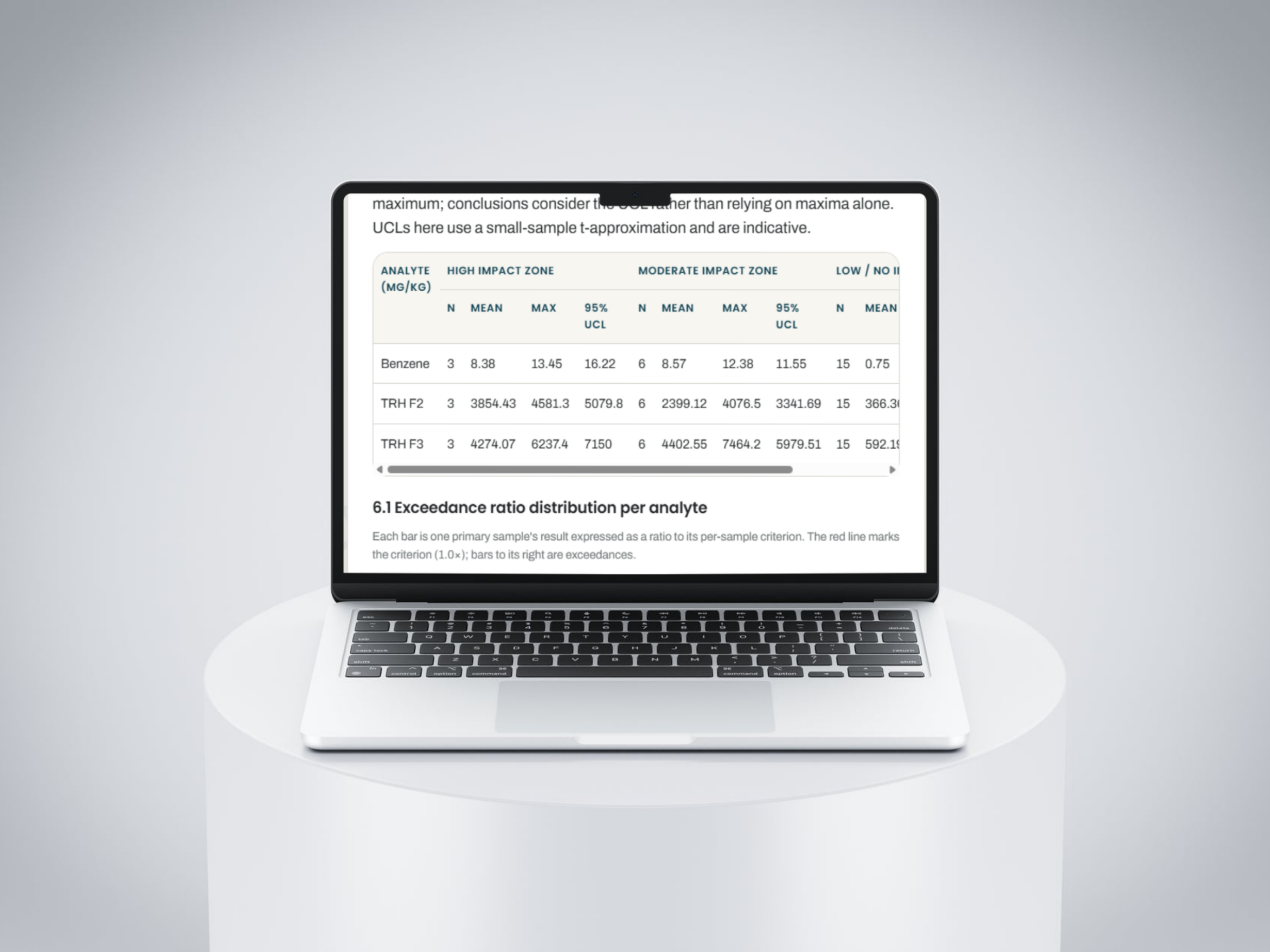
GXLab brings field collection, sample planning, chain of custody, lab results, mapping and reporting into one project workflow.

Teams can plan sample points spatially, collect GPS locations and field photos in the app, link samples to barcodes and lab submissions, then review results through maps, interpolation layers, exceedance tables and report-ready outputs.

  • Spatial sample planning
  • Field app data capture
  • Barcode and chain of custody tracking
  • Lab result management
  • Maps, exceedance tables and audit-ready outputs
Request a demo
GXLab contaminated site reporting software placeholder image

Rapid TPH soil screening with MIR

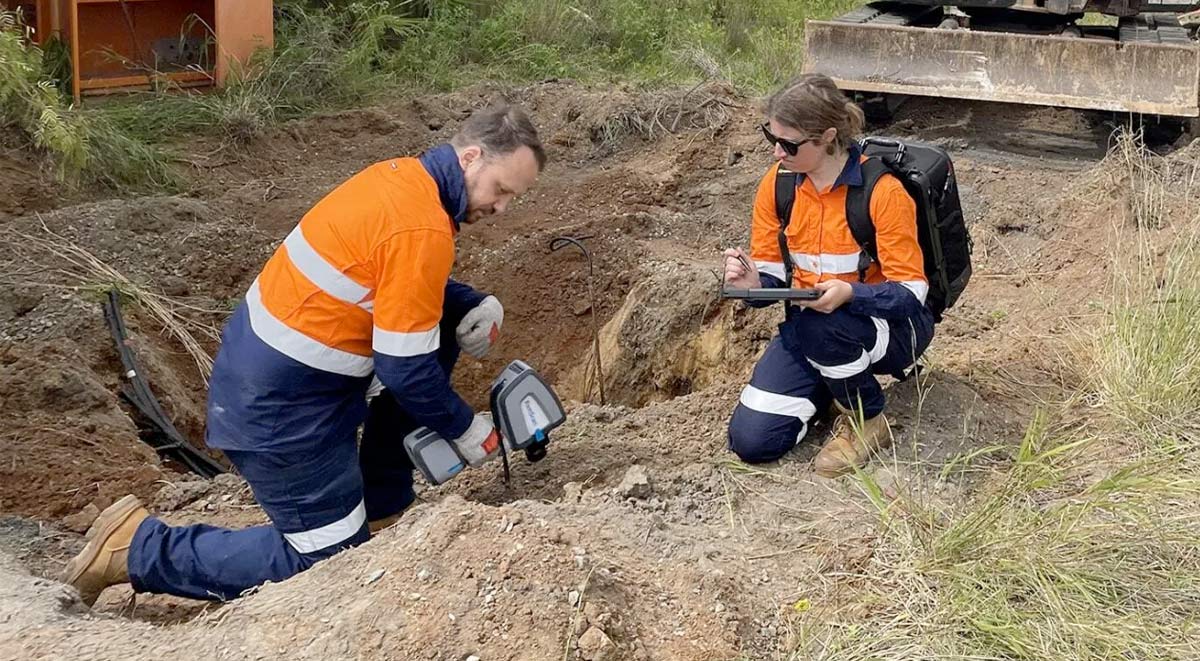
GXLab’s TPHSoil app uses mid-infrared FTIR spectroscopy, data analytics and machine learning to rapidly measure Total Petroleum Hydrocarbons in soil.

Using the portable RemScan spectrometer, teams can scan samples in the field or in a site laboratory to support faster screening, better sampling decisions and more targeted remediation.

  • Rapid TPH screening
  • Portable in-field or site laboratory use
  • Supports petroleum, mining and industrial projects
  • Machine learning-backed analysis
  • Additional soil data, including texture, pH and organic carbon
Request a demo
GXLab MIR soil screening placeholder image

Use Case Scenarios

Spill delineation & excavation chasing

Spill delineation and excavation chasing are essential for managing oil spills on soil. Delineation maps the extent of contamination, guiding targeted remediation and ensuring all affected areas are treated. Excavation chasing dynamically removes contaminated soil, continuously redefining boundaries. RemScan streamlines these tasks with real-time, in-field data and GPS mapping, improving accuracy, efficiency, and cost-effective restoration of environmental integrity.

Soil grading

Soil grading enables effective contamination management by sorting soil into concentration bands for tailored remediation. RemScan detects TPH from 0–100,000 ppm, ensuring accurate assessment across contamination levels. Low concentrations (0–1000 ppm) may require bioremediation, while higher levels need stronger treatments. Quick in-field TPH measurements with RemScan allow cost-efficient, targeted remediation, reducing environmental impact and improving overall site recovery.

Remediation monitoring

Remediation monitoring ensures effective soil decontamination and compliance with environmental standards. Continuous tracking of Total Petroleum Hydrocarbons (TPH) verifies remediation success and identifies issues. RemScan provides real-time, in-field TPH data, enabling immediate strategy adjustments. Its low measurement cost allows frequent testing versus costly lab analyses, improving decision accuracy and accelerating environmentally sound site restoration.

Related Products

RemScan

Bench Stand

Portable Drying Unit

We’re Here to Support Your Soil Remediation Efforts

At GXLab, we are committed to assisting you with your soil analysis needs. Visit the Contact page to connect directly with a GXLab expert. You can also follow us on LinkedIn to keep up with the latest developments, product updates, and upcoming events in soil remediation.